A solo course
A course without leads and follows, like styling, technique or a line dance. One capacity for everyone, no role to pick, no fill-ins.
For owners and managers
Some classes aren't danced in pairs: styling, technique, shines, footwork. For those, a course counts people, not leads and follows.
Where: Courses → New course.
Who: owners and managers.
Set it up#
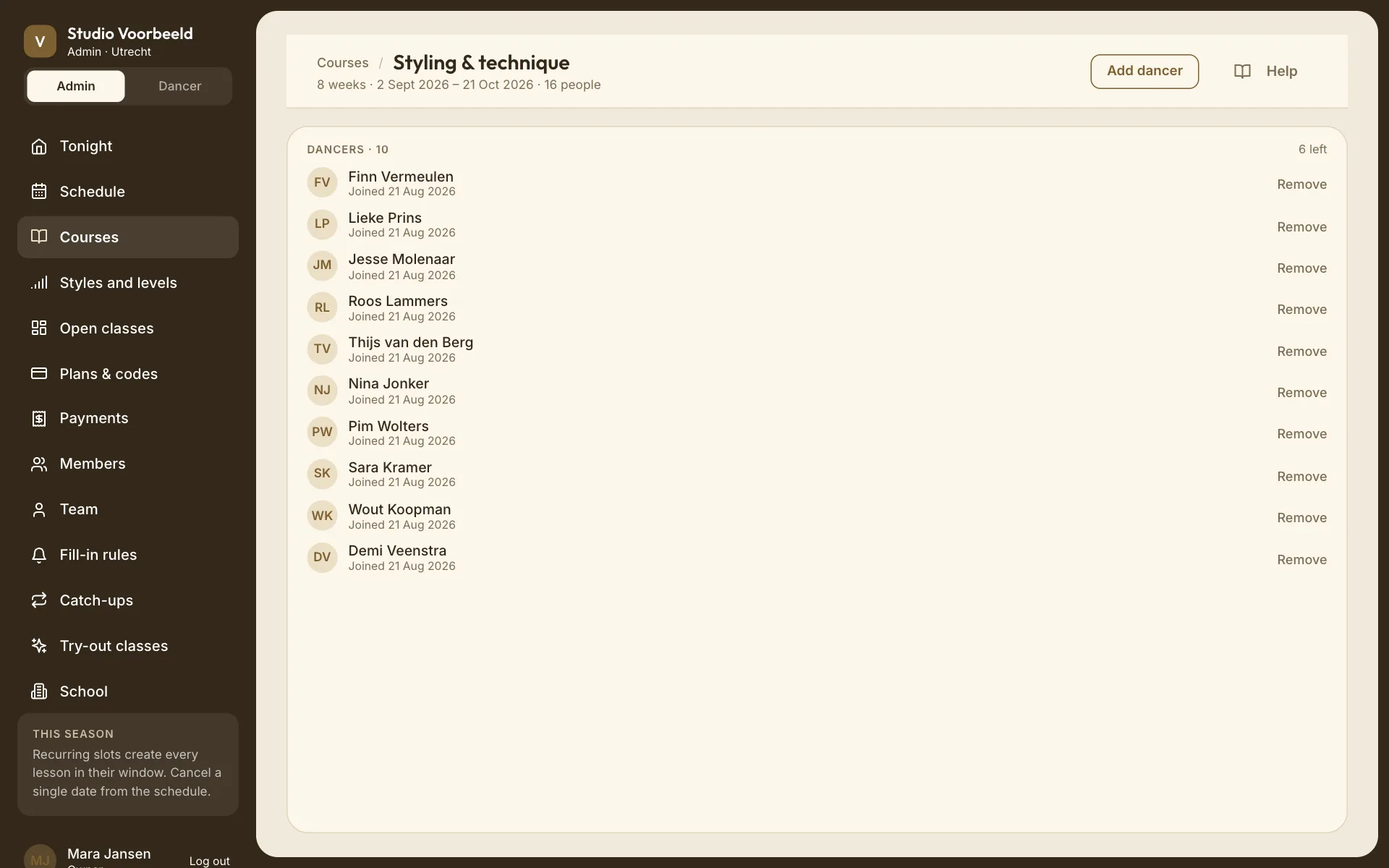
Studio Voorbeeld runs Styling & technique: Wednesdays at 19:00 in De Loods, Room 2, eight weeks, €90, for 16 people.
- Name: "Styling & technique". Style: Ladies styling. Level: Any level.
- Room: De Loods · Room 2. Teachers: Jens.
- Turn on Solo work — no leads and follows. The capacity field changes to How many people: 16.
- Price (€): 90.
- Day Wednesday, Time 19:00, First lesson, How many weeks 8.
- Publish course.
Turn solo on before anyone enrols. It decides how seats are counted.
What's different#
| Partner course | Solo course | |
|---|---|---|
| Capacity | Per role: 12 means 12 leads and 12 follows. | People: 16 means 16. |
| Enrolling | The dancer picks lead or follow. | No role to pick. |
| Fill-ins | Asked for when one role is short. | Never: there's no balance to fix. |
| Roster | Leads and follows. | One list of dancers. |
| Who is in page | Leads and Follows columns. | One Dancers column, with places left. |
| Adding someone | Choose Dancing as. | No role asked. |
| Tonight | Leads / follows and a gap. | no roles, never short. |
Catch-ups and try-outs#
Both work as usual. A dancer who misses a week can catch up in another class your catch-up rules allow, and a newcomer can try week 1 if your try-out rules offer it. A try-out needs a free place, like anyone else.
Solo open classes#
The open-class editor has no solo option for classes and workshops: they always count leads and follows. An Event has no roles, but it also has no teacher, style or level, so it suits a practica rather than a taught class. For solo teaching, run a solo course. See Open-class editor.